



Physical access control is increasingly evolving from standalone door security towards software-defined platforms integrated with smart building operations. At the same time, recurring software revenues and cloud services are becoming more important.
James McHale’s answers to Detektor’s questions are based on Memoori’s latest report, The Physical Access Control Business 2025 to 2030, in which Memoori analyses the global market for access control hardware, software and credentials.
How large is the global physical access control market?
The global physical access control market reached $15.1 billion in 2024 and is projected to grow to $21.3 billion by 2030, representing a compound annual growth rate of 5.94 per cent.
How concentrated is the market?
Companies with more than $1 billion in access control revenues account for approximately 24.4 per cent of global revenues. However, mid-sized specialists remain particularly important. The 28 companies with revenues between $100 million and $1 billion collectively account for 64 per cent of the global market.
Which regions are driving the growth?
Asia Pacific is expected to overtake Europe as the second-largest access control market by 2030. Unlike mature markets, where much of the business is driven by retrofits, growth in Asia Pacific is being fuelled by new construction across offices, logistics, manufacturing and government facilities.
What is happening in terms of mergers and acquisitions?
M&A activity remains strong. Between September 2023 and September 2025, 16 transactions with a combined value of $7.9 billion were completed. The largest was Honeywell’s $4.95 billion acquisition of Carrier’s access control business.
What about investment in access control companies?
Venture capital investment has declined significantly from its 2021 peak, but investment continues, particularly in unified cloud platforms. Between September 2023 and September 2025, 12 investment deals brought more than $326 million in disclosed funding into the sector.
What are the biggest changes taking place in access control?
Physical access control is evolving from standalone door security into a software-defined platform at the centre of smart building operations. Cloud architectures, mobile credentials and artificial intelligence are reshaping how organisations secure facilities, manage identities and optimise workplace experiences.
How is this changing the business model?
Value is increasingly shifting from traditional hardware margins towards recurring software revenues, managed services and cloud subscriptions. The industry is gradually moving from product sales towards platform economics and longer-term service relationships.
What role are mobile credentials playing?
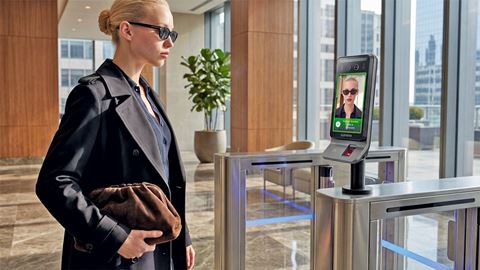
Mobile credentials represent a significant change in how organisations provision, manage and revoke access rights. The market is moving from proprietary app-based credentials towards wallet-native credentials embedded directly in Apple Wallet and Google Wallet, enabling tap-to-enter access without users having to unlock their devices.
What exactly does the report cover?
The report analyses the global access control market across three core revenue categories: hardware, including electronic locks, readers and control panels; credentials, including cards, mobile credentials and biometrics; and software, covering both on-premises and cloud-based platforms. The analysis evaluates 273 active companies worldwide.
Which technology trends are particularly important?
Cloud and Access Control as a Service, AI and machine learning, mobile access control, biometrics, multifactor authentication, IP and IoT, interoperability, systems integration, cybersecurity and data privacy.
Does the report cover all these trends?
Yes, but it also examines sustainability, supply chains, M&A, strategic alliances and investment trends.
Why is the report particularly relevant now?
Because it examines not only the size and growth of the market, but also how the underlying business is changing. It looks at where revenues and profits are moving, which technologies and business models are attracting investment, how M&A is reshaping the competitive landscape and how strategic alliances are influencing interoperability and the development of multi-vendor ecosystems.
Footnote: Memoori’s full report, The Physical Access Control Business 2025 to 2030, can be ordered at www.armedia.se.











 Global