


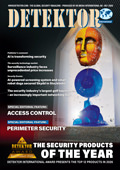
Digital locking systems – security and technology in modern buildings
Access control has evolved from mechanical keys to advanced digital solutions controlled by smartphone or biometrics. As the technology has matured, more and more property owners and businesses are choosing to install digital locking systems. But how does this actually affect security, and what pitfalls should you watch out for?

Why digital locking systems are growing in popularity
Several factors are driving the shift toward digital access control in both residential and commercial properties.
Convenience for users
With a digital locking system, tenants and employees no longer have to carry heavy key rings. Many modern systems use the smartphone as a key via Bluetooth or NFC, so you always have access as long as you have your phone with you. The problem of forgotten keys simply goes away.
Simpler administration
For property owners and businesses, digital locking systems are a huge simplification:
- When someone moves out or leaves the company, you no longer need to collect keys or rekey locks
- You simply remove the person's access privileges in the system
- New tenants or employees get access right away via the app or a card
- All key management is handled digitally, with no in-person meetings
Flexible access privilege management
A modern access control system makes it possible to give different people different levels of access:
- The cleaning crew only has access during daytime hours on weekdays
- Vendors can be let into the loading dock but not into the offices
- Tenants only have access to their own floor and common areas
- Time-limited codes for contractors coming in to make a repair
Audit trails and logging
Every entry is recorded automatically. This means you can see exactly who opened which door and when. In the event of an incident or suspicious activity, you have a digital trail to follow. This is especially valuable for organizations with strict security requirements.
Cost savings over time
| Cost | Traditional locking system | Digital locking system |
|---|---|---|
| Key duplication per year | Recurring annual cost | None |
| Rekeying when tenants move out | Cost per apartment at every move-out | None |
| Administration time | 10–20 hours/month | 2–5 hours/month |
| Initial investment | Lower | Higher |
| Total cost over 10 years | Higher | Lower |
Different technologies for digital locking systems
There are several technologies for digital access control, each with its own strengths and weaknesses.
Keypad locks and PIN codes
The simplest form of digital locking system is the keypad lock, where the user enters a personal code to unlock the door. These systems are inexpensive to install and easy to use, which makes them a good fit for smaller properties or individual doors.
Pros:
- Low upfront cost
- No credential to carry
- Works without a smartphone
- Simple installation
Cons:
- Vulnerable if codes are shared or someone watches you enter the code
- Requires regular code changes to maintain security
- Harder to track who used a shared code
- Remembering multiple codes can be impractical
Modern keypad locks can, however, be combined with app control so that you as the administrator can change codes remotely and view logs of when the door was opened.
RFID cards and fobs
RFID-based access control systems use cards or fobs that are held up to a reader. The technology is well proven and used in many office environments and apartment buildings. Entry is fast and seamless, cards can easily be deactivated if lost, and the cost per user is relatively low.
There is a risk of cards being cloned, although modern encrypted cards reduce that risk. Users still have to carry a physical card, which can be seen as a drawback compared with mobile-based solutions.
Bluetooth and mobile-based systems
Mobile-based locking systems have surged in popularity. Here, your smartphone serves as the key. Security is high thanks to encryption, and the user only needs to have their phone on hand. New users are given access through an app, which simplifies onboarding.
Many systems also allow guest access with time-limited digital keys – perfect for Airbnb rentals or visitors to a business. The downside is that the system requires the user to have a Bluetooth-enabled smartphone, and phone battery life can become a limitation.
Biometric systems
The most advanced digital locking systems use biometrics. Fingerprint, facial recognition or iris scanning offer very high security because they are difficult to spoof. There is nothing to lose or forget.
Comparison of biometric methods:
| Method | Security level | Cost | Ease of use | Weather resistance |
|---|---|---|---|---|
| Fingerprint | High | Medium | Very good | Good |
| Facial recognition | Very high | High | Excellent | Weaker |
| Iris scanning | Extremely high | Very high | Good | Medium |
On the other hand, costs are higher for both hardware and installation. Some systems perform less well in extreme weather, and biometrics can raise privacy concerns for some users. Biometric access control is mainly used in high-security environments such as data centers, labs or sensitive business facilities.
Hybrid systems
Many modern digital locking systems combine several technologies. For example, a system might offer:
- RFID cards as the primary method
- Mobile credentials via Bluetooth
- PIN code as a backup
- Biometrics for especially sensitive areas
This provides flexibility and ensures that users always have an alternative if one method fails.
Electric strikes – the core component of access control
When it comes to digital access control, the electric strike is a core component. An electric strike is the electromechanical lock that actually keeps the door closed and releases it when the correct credentials are presented.
How does an electric strike work?
The technology is based on electromagnetism. When current runs through the electric strike, magnets are activated that hold a metal plate in place. When an authorized user is identified, the current is cut and the door can be opened. Some electric strikes work the opposite way and are normally open – they only lock when power is applied.
The electric strike is integrated with your digital locking system and communicates continuously with the reader and the system controller. When the reader verifies an authorized user (via RFID card, mobile credential or biometrics), a signal is sent to the electric strike, which releases the door.
Holding force and applications
Holding force is measured in kilograms or newtons. Exterior doors and high-security environments call for higher holding force, often 500 kg (about 1,100 lb) or more. A standard office door can often get by with 300 kg (about 660 lb). The choice of holding force depends on:
- Door type and weight
- Traffic volume (how often the door is used)
- Required security level
- Whether the door is part of an egress path
Fail-safe or fail-secure
This determines what happens during a power outage. Fail-safe electric strikes unlock automatically and are used on egress routes where people must be able to get out in a fire. Fail-secure electric strikes stay locked and are used where security takes priority over egress.
Weather resistance and environment
Electric strikes mounted outdoors need an IP rating that can handle rain, freezing temperatures and temperature swings. IP65 or higher is recommended in cold or wet climates. For indoor use, IP20–IP40 is often sufficient.
Integration with other systems
The electric strike must be able to communicate with:
- Your access control system and readers
- Fire alarm and security systems
- The building's other security systems
- Intercom or video intercom
In apartment buildings, it is common to combine electric strikes with an intercom so that tenants can buzz in visitors via the app or by pressing a button in their unit.
Security challenges with digital locking systems
Although digital access control offers many benefits, it also introduces new security risks that do not exist with traditional locking systems.
Cybersecurity and hacking risks
A digital locking system is essentially a computer connected to the internet or a local network. That makes the system vulnerable to cyberattacks.
Common threats to digital access control:
- Weak passwords – Many systems ship with default passwords that users forget to change
- Outdated firmware – Known vulnerabilities are left open without regular security updates
- Man-in-the-middle attacks – Communication between the app and the lock can be intercepted if encryption is weak
- Ransomware and sabotage – Attackers can take control of the entire access control system
- Replay attacks – Someone records and reuses the signal from a valid card or phone
How to protect your digital locking system
Change all default passwords immediately at installation and use strong, unique passwords for administrator accounts. Enable two-factor authentication wherever possible. Schedule automatic security updates and review security logs regularly. Isolate the access control system from other networks if possible, and choose vendors with a documented security track record. Have an incident response plan in place.
Physical security
Digital locking systems can also be subject to physical attacks.
Hardware tampering can occur if the reader is mounted outdoors. Someone may try to open it and get to the electronics. Vandal-resistant readers with high IP and IK ratings are therefore important.
Power outages create uncertainty. What happens if the power goes out? Fail-safe electric strikes unlock automatically, which can be a security problem in some environments. Battery backup or emergency power is needed for critical doors.
Backup solutions often come in the form of a mechanical key cylinder. If it is not properly protected, it becomes the weak link in the system. Restrict access to the override key and store it securely.
User error and social engineering
The technology can be as secure as you like, but people make mistakes.
Common security gaps:
- Code sharing – Tenants or employees share their codes with friends or family
- Phishing – Attackers pose as IT support and trick users into handing over their login credentials
- Tailgating – People slip through a door right behind someone with legitimate access
- Sticky notes with codes – People write their codes down in visible places
- Unchanged temporary codes – Cleaning crews or vendors are given codes that are never changed
Safeguards:
Train users on security risks and the policy on code sharing. Use time-limited guest keys instead of sharing personal codes. Install sensors that detect when more than one person passes through. Make it clear that personal access may not be shared. Implement automatic alerts for unusual usage patterns.
Privacy and data protection
Digital access control systems log every entry, which generates large amounts of personal data. Under data protection laws such as the EU's GDPR, this data must be handled responsibly.
GDPR requirements for access control systems:
| Requirement | In practice |
|---|---|
| Retention period | Logs must not be kept longer than necessary (often 30-90 days) |
| Access | Only authorized personnel may view the logs |
| Notice | Users must be informed that their entries are logged |
| Secure storage | Log data must be encrypted and protected against breaches |
| Deletion | Users have the right to have their data deleted |
| Anonymization | Consider anonymizing older logs |
Property owners and businesses that violate these rules risk significant fines from regulators. Penalties can be substantial depending on the severity of the violation.
Digital locking systems in apartment buildings
Installing access control in a multifamily building brings both opportunities and challenges.
Benefits for property owners
Simpler leasing process
New tenants can receive a digital key right away without meeting you in person. Ideal for modern rental services and for tenants moving in at inconvenient times.
Less key administration
No more:- Keeping track of key copies
- Key returns at move-out
- Emergency rekeying when keys go missing
- Disputes over lost keys
- Costs for new locks
Better security
You know exactly who has access to the property at any given time. If something happens, you have complete logs to review.
Value-added amenities
Offer tenants modern solutions:
- Package lockers with digital access
- Bookable guest suites
- Laundry rooms with app control
- Common spaces that can be reserved by phone
- Buzzing in visitors digitally via the intercom
Benefits for tenants
Convenience
No heavy key ring to lug around. Your phone is all you need to get into the building, your apartment and all common areas.
Flexibility
Easily let in visitors or contractors via the app, even when you are not home. Give your child a digital key that works even if their phone battery is dead.
Peace of mind
There is no risk of keys falling into the wrong hands. Access privileges can be revoked immediately if a phone is stolen.
Less hassle when moving
Skip the stress of returning keys and waiting for the move-out inspection. Your access is removed automatically on move-out day.
Challenges to address
Digital divide
Not all tenants are comfortable with technology. Seniors or people without a smartphone may find the system complicated.
Solutions:
- Offer alternatives such as physical RFID cards
- Provide a code as a backup option
- Give a thorough orientation at move-in
- Provide clear instructions in multiple languages
- Offer good support that tenants can call
Connectivity and reliability
If the system requires an internet connection and the server goes down, nobody can get in.
Solutions:
- Choose a system with local backup
- Have an offline mode that works without internet
- Redundant connectivity via 4G/5G as backup
- Mechanical key as an emergency fallback
Upfront cost
Installing digital locking systems throughout a property is an investment. For an apartment building with 30 units, the costs might break down like this:
Hardware:
- 5 digital locks with electric strikes (main entrance, basement, laundry room, bike room, trash room): the largest hardware item
- RFID readers and controllers
- High holding-force electric strikes
- Network equipment
Installation:
- Electrician and locksmith
- Configuration
Software:
- Licenses
Total upfront investment: hardware, installation and software combined
Ongoing costs:
- Support and licenses: monthly subscription
- Maintenance: annual cost
Annual savings:
- Key management
- Rekeying
- Administration time
- Total savings: typically well above the ongoing costs
Payback period: approximately 3 years
Integration with existing infrastructure
In older buildings, running new cabling or installing network equipment can be complicated.
Alternatives:
- Wireless systems that communicate via Wi-Fi or cellular networks
- Battery-powered locks that require no wiring
- Powerline technology that uses existing electrical wiring
- Professional site survey before installation
Digital locking systems for businesses
Businesses often have more complex access control requirements than residential properties.
Zoning and access levels
In an office environment, you will want to divide the building into different security zones.
Level 1: Public zones
- Reception and waiting area
- Meeting rooms for external meetings
- Cafeteria and common areas
- Restrooms
- Open to visitors with limited access
Level 2: General office areas
- Open-plan offices
- Standard conference rooms
- Employee break rooms
- Printing and copying
- Open to all employees
Level 3: Restricted areas
- Finance department
- HR office with personnel files
- IT rooms with network equipment
- Records and storage rooms
- Accessible only to specific departments
Level 4: High-security areas
- Server rooms and data centers
- Labs with sensitive equipment
- CEO and executive offices
- Secure rooms and vaults
- Often require two-factor authentication
A good digital locking system lets you define these zones and assign each employee the right access level based on role and responsibilities. You can also set time restrictions so that certain people only have access during business hours.
Integration with other systems
For businesses, it is valuable if the access control system can be integrated with other systems.
HR systems
Automatic provisioning and deprovisioning of access. When someone is hired, they automatically get the right access privileges based on their role. When someone leaves, all access is revoked immediately.
Time and attendance
Use entry logs as the basis for attendance tracking. The system can automatically log when employees arrive and leave, which simplifies payroll and scheduling.
Visitor management systems
Digital visitor badges are activated automatically when a guest checks in at reception. The visitor gets limited access to specific areas for a set period of time.
Fire alarm and evacuation systems
Electric strikes on egress routes are released automatically in a fire so that employees can get out. The system can also show where people are in the building to help emergency responders.
Video surveillance
Link entry logs with video surveillance for a complete audit trail. In the event of an incident, you can see both who passed through and what happened on video.
Building automation
Integrate with HVAC, lighting and ventilation controls. When the first person arrives in the morning, heating and lights come on. When the last person leaves in the evening, energy consumption is scaled back.
How to scale the system
Businesses grow and change. Your digital locking system must be able to grow with the organization.
What to consider:
The ability to add more doors without replacing the central system. Unlimited users or a high user limit. Modular design that lets you upgrade components without replacing everything. Open APIs for integration with future systems. A cloud-based platform that scales automatically. Support for multiple buildings and geographic locations. A flexible licensing model that grows with your needs.
Regulatory compliance
Some industries have specific requirements for access control and logging.
Healthcare
Data protection and health information privacy rules set strict requirements. You must be able to track exactly who has had access to sensitive patient areas and when. Logs must be retained as required by law, but also deleted once they are no longer needed.
Finance
Financial privacy rules and requirements for two-factor authentication for vaults and secure areas. Audits often require detailed documentation of all access events.
Manufacturing
Protection of patents and confidential product information. Export-controlled technology may require additional security levels and documentation of who has had access.
Public sector
Public records laws may mean that logs must be released on request, while personal data must still be protected under applicable privacy laws.
Make sure your access control system meets industry-specific standards and can provide the documentation required for audits.
Costs of digital locking systems
Costs vary widely depending on the system, the number of doors and the features required.
Upfront costs
Hardware
| Component | Cost | Notes |
|---|---|---|
| Electronic locks | Low to high, per door | Higher cost for outdoor use |
| RFID readers | Low | Standard office grade |
| Bluetooth readers | Medium | Requires a compatible phone |
| Biometric readers | High | Fingerprint or face |
| Electric strikes | Low to medium | Depending on holding force |
| Controllers | Medium to high | Handle 4–32 doors |
| Network equipment | Varies | Depending on existing infrastructure |
Installation
- Electrician and locksmith: typically priced per door
- Network cabling: priced per drop
- Configuration and programming: billed hourly
- Employee training: one-time cost
Software
- Perpetual license: depends on system size
- Cloud-based solution: monthly fee per door
- Mobile app: Often included
- Integrations: priced per integration
Ongoing costs
Monthly fees for cloud-based systems:
- Small systems (1–10 doors): low monthly fee
- Mid-size systems (11–50 doors): moderate monthly fee
- Large systems (50+ doors): higher monthly fee
Annual maintenance:
- Service contract: 5–10% of hardware cost
- Security updates: Often included
- Support and help desk: annual fee
- Battery replacement (for battery-powered locks): small annual cost per lock
Total cost examples
Apartment building with 30 units
Upfront investment:
- 5 digital locking systems with electric strikes
- RFID readers and mobile credential support
- Installation and configuration
- Software and licenses
- Total: the sum of the items above
Ongoing costs:
- Support and licenses: monthly subscription
- Maintenance and service: annual cost
- Total per year: support, licenses and maintenance combined
Annual savings:
- Key management and duplication
- Rekeying at move-out
- Administration time (estimated value)
- Total savings: more than twice the annual operating costs
Net after savings: Investment paid back in about 2.5 years
Company with 50 employees
Upfront investment:
- 20 doors with RFID and biometrics: the largest single cost item
- Control panels and network
- Installation and integration: the second-largest cost item
- HR system integration
- Training
- Total: the sum of the items above
Ongoing costs:
- Support and licenses: monthly subscription
- Maintenance: annual cost
- Total per year: support, licenses and maintenance combined
Choosing the right digital locking system
Here are the factors to consider before investing in an access control system.
Assess your needs
Start by answering these questions:
- How many doors will the system cover?
- How many users need access?
- Which access levels and zones are needed?
- Is integration with other systems required (HR, time and attendance, fire alarm)?
- What security requirements apply to the organization?
- Does the system need to work offline?
- Are there specific compliance requirements?
Evaluate the technology
Basic technology choices:
| Aspect | Options | When is it a good fit? |
|---|---|---|
| Credential type | RFID, mobile, biometrics, code | Mobile for convenience, biometrics for the highest security |
| Connectivity | Hardwired, wireless, hybrid | Wireless in older buildings, hardwired for the highest reliability |
| System architecture | On-premises, cloud-based, hybrid | Cloud for flexibility, on-premises for offline operation |
| Power supply | Hardwired, battery, hybrid | Battery for easy installation, hardwired for critical doors |
Test the user experience
How quickly does the door open after identification? Is the system intuitive for new users? Is the mobile app easy to navigate and logical? How many steps does it take to let a visitor in? Does the system work equally well for all age groups? Is there clear feedback when something goes wrong? How easy is it to switch phones? Can the system be used while wearing gloves (relevant outdoors)?
Security and support
What security certifications does the vendor hold? ISO 27001 and SOC 2 are good standards to look for. How often is the system updated with security patches? Which encryption standard is used? At least AES-256 is recommended. Is penetration testing documented? How are security incidents handled? What happens in the event of a power outage or system failure? How quickly can support be reached? Is local support available in your language? What warranty period is offered?
Future-proofing
A digital locking system is a long-term investment. Consider the following:
Can the system grow with the organization without a complete overhaul? Does the system use open standards or proprietary protocols? Is there an active ecosystem of partners and developers? How long has the vendor been in business? What are the vendor's plans for the future? Can the system be updated with new features later?
Cost versus value
Don't just compare the purchase price; compare the total cost of ownership (TCO) over 5–10 years.
Include in the TCO calculation:
Upfront hardware and installation. Ongoing licenses and support. Maintenance and updates. Energy consumption. Administration time. Training for new users. Any future expansion.
Weigh against:
Savings from reduced key administration. Improved security and lower risk of break-ins. Time savings for tenants and employees. Opportunities for new services and revenue. Increased property value.
Legal and compliance
Does the system comply with applicable data protection laws and local video surveillance regulations? How long is log data retained? Who has access to the logs? How are users informed about data processing? Are there procedures for data breaches? Do you have a data processing agreement with the vendor? Is all access to the system's administration documented?
The future of digital locking systems and access control
Access control and digital locking systems are evolving rapidly. Here are some of the trends shaping the future.
Greater standardization
Today, many systems are proprietary, which means you are locked in to a single vendor. But the industry is moving toward more open standards such as:
- Open Supervised Device Protocol (OSDP) for secure communication between readers and controllers
- Bluetooth mesh for large-scale installations
- Matter for smart home integration
- API standards for easier integration
This makes it easier to switch vendors and integrate different systems with each other without major costs.
Biometrics are getting cheaper and better
Prices for biometric readers keep falling while accuracy improves. Technologies that are becoming increasingly common:
- Multimodal biometrics (combining facial recognition and fingerprint)
- Iris scanning for extremely high security
- Vein scanning that works even with gloves on
- Gait recognition that identifies people at a distance
Within a few years, biometrics will be standard even in smaller properties and businesses.
AI-driven security
Machine learning will make access control systems smarter by learning the normal patterns of each user. The system can detect anomalous behavior automatically and anticipate security risks before they occur. Access privileges can be optimized based on actual usage, and inefficient security routines can be identified.
If an employee has never used their access to the server room, the system can recommend removing that privilege. If someone suddenly tries to get in in the middle of the night, it is flagged automatically.
Sustainability and energy efficiency
Vendors are starting to offer greener alternatives with lower energy consumption thanks to better battery technology. Recyclable materials in the hardware and longer service life through modular design are becoming more important. Solar-powered readers for outdoor use and carbon-offset shipping and manufacturing are on the rise.
Modern digital locking systems can also be integrated with the building's energy management to automatically adjust heating, ventilation and lighting based on when people come and go.
Greater interoperability between systems
The vision for the future is a mobile credential that works seamlessly everywhere. At home in your condo, at the office where you work, in the parking garage under the office, at the gym you belong to, on public transit and at hotels when you travel. All in the same app with a single shared digital identity.
Summary
Digital locking systems and modern access control offer tremendous convenience, flexibility and improved security compared with traditional mechanical locks. For both apartment buildings and businesses, there are clear benefits in terms of administration, cost savings and ease of use.
Top benefits of digital access control:
- No more physical keys and key management
- Flexible access privilege management with different access levels
- Complete logging of all entries
- Easy onboarding of new users
- Cost savings over time
- Remote management and integration capabilities
Challenges to address:
- Cybersecurity requires active management
- Data privacy protections must be implemented
- Dependence on power and internet requires backup solutions
- The upfront investment can be significant
- Users need training and support
Core components of a complete system:
Readers (RFID, mobile, biometric) are combined with electric strikes that have the right holding force and fail-safe function. Controllers and control panels run the system, while software handles administration and logging. Network infrastructure or wireless communication connects the components, and backup solutions keep the system running during power outages.
For most modern properties and businesses, the question is no longer whether to switch to digital access control, but when – and which system is the best fit. With the right preparation and a well-considered choice, you get a locking system that runs smoothly for years to come and can easily be adapted as your needs change.
Technology is moving fast, and the systems of the future will be even smarter, more secure and easier to use. By choosing systems with open standards and good scalability, you ensure your investment holds up as new innovations arrive. Electric strikes and other components are constantly being refined to become more energy-efficient and environmentally friendly, while security keeps improving.



 Global