





The rising demand for security enhancements across various sectors, including businesses, schools, and homes, propels the market forward. Technological advancements in artificial intelligence and deep learning are bolstering the effectiveness of video surveillance systems in detecting and responding to threats. In addition, government regulations mandating the use of such systems in public spaces and critical infrastructure are accelerating their adoption. Moreover, the increasing affordability of video surveillance systems is expanding their accessibility to a wider range of businesses and organisations.
IoT experiencing rapid growth
The integration of IoT technology into video surveillance is experiencing rapid growth. IoT cameras enable remote monitoring and control, which is particularly valuable for extensive or remote locations. They are programmed to send alerts when they detect certain events, such as motion detection or unauthorised access, minimizing false alarms and streamlining response times. IoT cameras gather and analyse data through data analytics to identify patterns and trends, augmenting security measures and preventing incidents. Moreover, IoT cameras are cost-effective, requiring less infrastructure, such as cables and servers, than traditional surveillance systems.
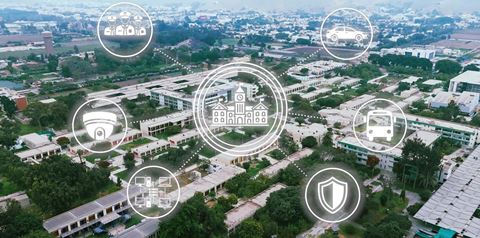
Smart city initiatives drive Asian markets
The Asia Pacific market is experiencing rapid growth due to heightened concerns for security and safety in both public and private settings. This geographical area held 36.2% of the global market in 2025, with China leading the way with the largest revenue share in 2025. The surge is fueled by the adoption of smart city initiatives, the rising popularity of cloud-based surveillance systems, and technological advancements in the field. With densely populated countries like China and India undergoing rapid urbanisation, the region is witnessing an upswing in crime rates, further boosting the demand for advanced video surveillance solutions.
Additional facts and figures from the research
- By component, the hardware segment led the market and held the largest revenue share of over 71% in 2025. The services segment is anticipated to grow significantly in the coming years, driven by a surge in demand for video surveillance systems, necessitating specialised skills for installation and configuration.
- By system type, the IP video surveillance systems led the market and held the largest revenue share of over 55.7% in 2025. The hybrid video surveillance systems segment is anticipated to witness significant growth in the coming years.
- By vertical, the commercial segment accounted for the largest market revenue share in 2025. The industrial segment is likely to show notable growth over the forecast period.
Some of the key players from the video surveillance market and named within the report include companies such as, Hikvision, Dahua, Bosch, Axis, Motorola, Uniview, TKH, Hanwha Vision and Infinova.












 Global