




Modern access control and alarm systems can do more than secure a facility – they can also enhance efficiency and productivity, says Neil Foster, Regional Sales Director for Northern Europe at ICT, a developer and manufacturer of unified and intelligent access control and security solutions.
“By consolidating different systems into a central platform and automating events – for example switching off air conditioning, turning off lights or arming an area when no one is present – you can go beyond security,” he explains.
“The access control system also becomes a tool for driving operational efficiency and reducing energy costs, which should be factored into any investment decision.”
Productivity in practice
Neil Foster illustrates this with an example:
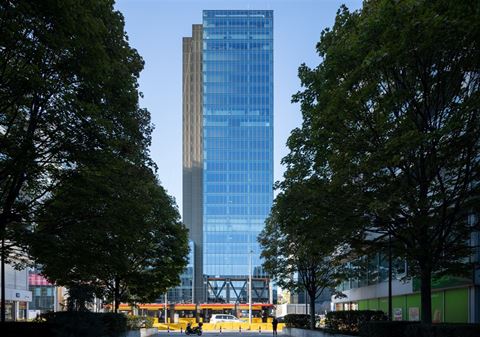
“If the access control platform is integrated with turnstiles and elevator systems in a high-rise building, it can manage people flow and direct users to the fastest lift to their destination floor. Saving just a few minutes for hundreds or even thousands of people every working day leads to significant productivity gains. In high-demand environments such as healthcare, those minutes can be absolutely critical.”
Smarter step by step

Modernising equipment on a limited budget can be challenging and requires strategic planning. By carefully reviewing the existing technical infrastructure, it is often possible to identify older, compatible equipment for integration, enabling a phased and systematic migration to smarter systems.
“At ICT we have worked with many customers who have carried out phased migrations, significantly reducing project costs while maintaining operational continuity by retaining parts of the old system and complementing it with ICT Protege Access Control,” explains Neil Foster.
“This gives customers immediate access to new features and thirdparty integrations supported by Protege GX – ICT’s access control and intrusion detection platform – while keeping initial investments and disruptions to a minimum.”
“Replacing hundreds of readers, door controllers and an entire credential base all at once is a major undertaking and can cause major disruption, particularly in 24/7 operations.”
Continuous synchronisation
A critical point in migration is ensuring that legacy and new access control servers continuously synchronise data to avoid discrepancies in the user database. For this purpose, ICT offers the DataSync software, which enables gradual equipment upgrades tailored to customer needs and budgets.
Balancing cost, sustainability and security
Both private and public sectors face the challenge of optimising space utilisation while balancing cost, sustainability and security. The choice of technology has a major impact on both CAPEX (Capital Expenditures) – investments in fixed assets – and ongoing operational costs (OPEX), such as license subscriptions, service agreements and upgrades.
Neil Foster emphasises that access control is a core, embedded element of a building’s functionality, delivering both security and operational benefits.
“An open technology that can integrate with legacy equipment and third-party solutions – and can be adapted and scaled to meet new requirements via its flexible infrastructure – provides both risk minimization and economic benefits, in terms of both initial investment and future maintenance.”
“This is also the philosophy behind ICT and our open Protege platform,” he concludes.



 Global