




Persson compares Reks to Chat- GPT, as both are large language models, but Reks has been trained specifically for access control applications. The company’s founders now work within Acre Security.
“AI isn’t yet widely used in access control,” he says, “but we’re now implementing it into our Acre Access Control platform. The aim is to simplify processes so users can receive both reportbased and real-time insights into system activity – such as identifying irregular behaviour.”
Debut in Las Vegas
Acre Security’s first AI demonstrations in public took place at the major security trade show ISC West in Las Vegas in April in 2024, followed by a showcase at The Security Event in Birmingham, UK. In both cases, it was a success. The interest in AI and its usefulness in access control systems is evident.
Enhanced usablity
Today’s access control systems can already issue alerts for suspicious behaviour – for example, when an authorised user opens a door at an unusual time.
“But currently, this has to be configured for each individual door,” Persson explains. “With AI, you can imagine a system that continuously analyses event logs, learns what’s normal, and automatically raises alerts when something unusual occurs.”
He believes AI will make access control systems both simpler and more intuitive. A typical example is in reception, when a visitor arrives and needs temporary access.
“Currently, the receptionist has to check the calendar, decide when the person should have access, and determine which doors to open – a multi-step process. Access control systems are rarely user-friendly, often designed by engineers for engineers,” Persson says.
With AI, such tasks could become effortless
“For instance, if you tell the AI that a visitor should have access to the lobby and conference room for the next two days, it can instantly generate the required script and implement it in real time – no technical training required.”
Faster, smarter reporting
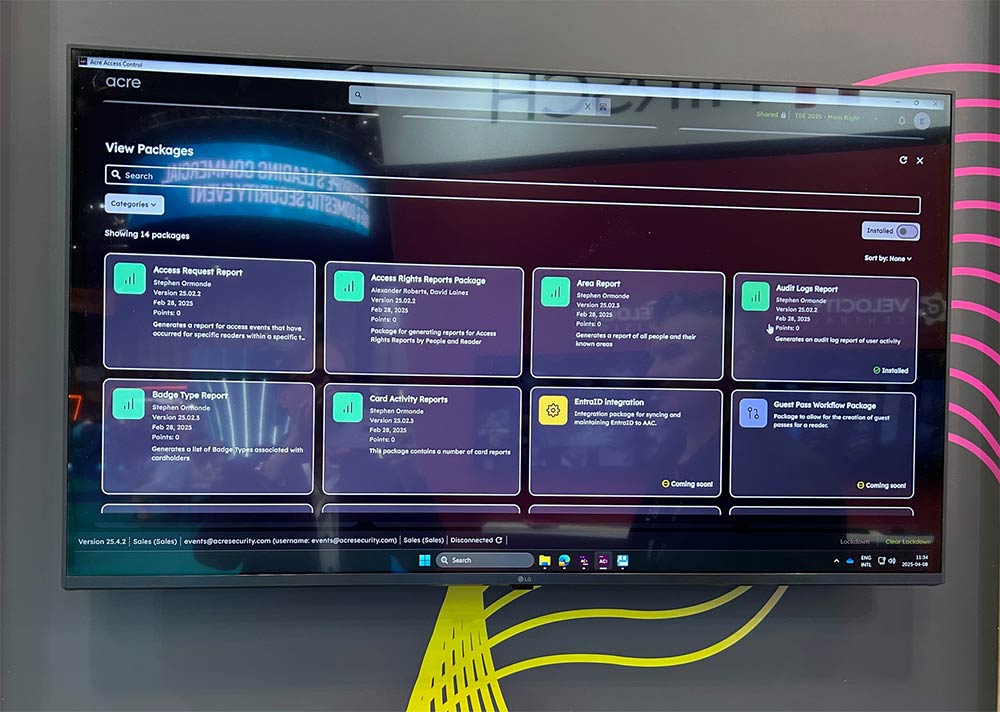
One of AI’s strongest advantages in access control is its ability to quickly generate customised reports.
“You might ask the AI to show who has accessed certain buildings during a given period – or, conversely, identify users who haven’t accessed specific areas for months, indicating their credentials might need to be revoked,” Persson explains.
“This can all be done in seconds. You could, for example, ask for a list of everyone over 35 who entered a specific door within the last 52 weeks – and the AI will instantly provide it in your preferred report format.”
AI as a Security Consultant
Persson also envisions AI acting as a virtual security consultant – analysing the entire access control infrastructure and suggesting improvements.
“You could ask the AI to review how the system is structured compared to how it’s actually being used, and then recommend enhancements,” he says. “It might identify that too many employees have access to unnecessary areas, or that a high number of temporary visitors and contractors are entering the site. Based on this, it could suggest creating new user groups, adjusting access levels, or other security improvements.”
He believes the potential of large language models in access control is still largely untapped.
“Because it’s an AI, new possibilities will emerge – and users themselves will likely discover use cases we haven’t even thought of yet.”
Human oversight still essential
Persson is careful to stress that AI does not make decisions on its own.
“It must be told what to do – whether that’s to trigger an alert, send a message, or initiate a lockdown,” he explains.
“These escalation chains require human decision-making. AI doesn’t replace that.” He continues:
“We can’t assume AI will solve everything. You still have to tell it what to look for. If someone who normally comes to the office five days a week suddenly stops showing up, the AI can detect it – but it won’t know if it’s something that needs reporting. You have to define what’s important. You could say AI knows everything, but it doesn’t know what you want to know. Just like with ChatGPT, it’s all about asking the right questions.”









.jpg?w=480&action=fill&sh=02a83 "Billede: Digitaliseringsstyrelsen")



 Global